

















A Kyrgyz delegation travelled to Antalya under FEE guidance to learn from Türkiye’s Blue Flag experience, in what is described as the first project of its kind in the post-Soviet region.

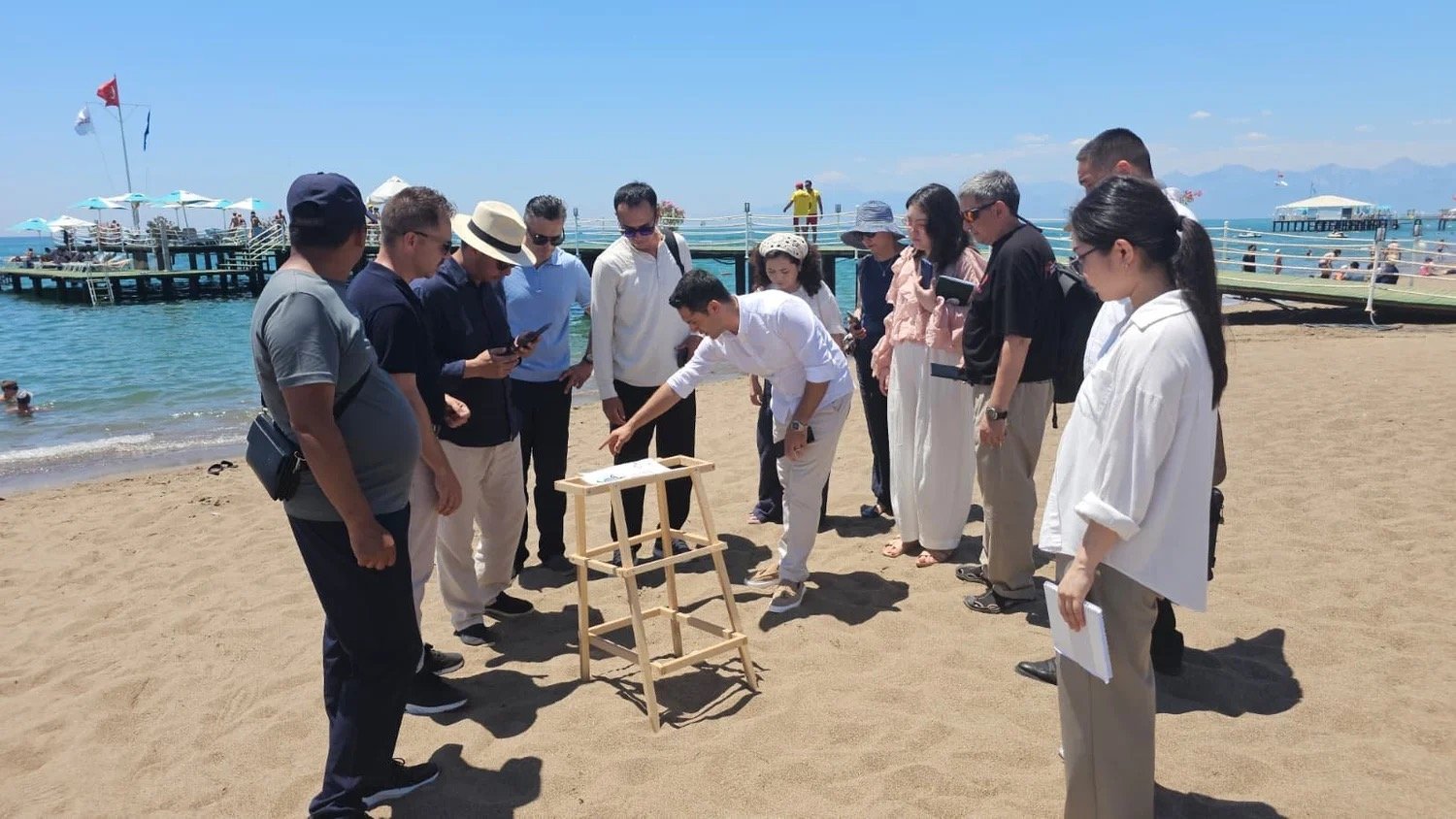
A delegation from Kyrgyzstan travelled to Antalya, Türkiye, to study the Blue Flag programme first-hand as the country explores bringing the certification to Lake Issyk-Kul. The visit was organised under the guidance of the Foundation for Environmental Education (FEE), with Türkiye — currently in third place worldwide by Blue Flag awards, as we reported before — acting as host and reference point.
Issyk-Kul is the second-largest mountain lake in the world after Lake Titicaca, stretching 182 km long and up to 60 km wide across an area of 6,236 km², enclosed by the peaks of the Tian Shan range at an altitude of 1,607 metres. Unlike most high-altitude lakes, it rarely freezes even in winter — a result of its relatively high salinity rather than any geothermal effect — which has made it Kyrgyzstan’s principal domestic and regional tourism destination for decades. That existing tourism weight is precisely why a Blue Flag push there would carry more practical significance than a symbolic first: it targets a coastline already handling substantial visitor traffic.
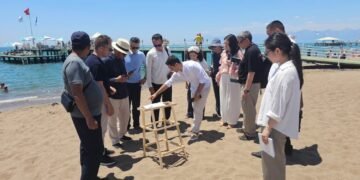
The Kyrgyz delegation included public authorities from the Tourism Development Agency under the Cabinet of Ministers of the Kyrgyz Republic, regional and local authorities from Issyk-Kul, representatives of the Kyrgyz Association of Tourism Organizations (KATO) and the Association of Resorts of Kyrgyzstan (AKK), heads of four pilot resorts, and advisors from GIZ. GIZ — the Deutsche Gesellschaft für Internationale Zusammenarbeit, the German government’s main international development agency — operates in more than 130 countries on behalf of Germany’s Federal Ministry for Economic Cooperation and Development (BMZ), with environmental and energy management among its core areas of work; its presence in the delegation situates the Issyk-Kul push within a broader bilateral development-cooperation effort, not a purely domestic tourism initiative. During the programme, Turkish specialists shared practices covering water purification, lifeguard operations and accessible facilities for people with disabilities.
“Currently, no former Soviet country has an active Blue Flag program. We want to bring this vision to Kyrgyzstan.” — Azamat Zhamankulov, head of the Association of Resorts of Kyrgyzstan
No former Soviet country currently holds an active Blue Flag certification, so if the project moves forward, Issyk-Kul would become the first Blue Flag site in the post-Soviet region. Lake Issyk-Kul’s beach infrastructure has long needed upgrades to meet international standards, which the Blue Flag system is intended to address — in line with the programme’s usual scope, which assesses sites against criteria covering water quality, environmental management, environmental education, and safety and services.
No source specifies an implementation timeline for Issyk-Kul, and no comment from Türkiye, FEE or GIZ was available at the time of writing.
Sources: Blue Flag International · 24.kg · Blue Flag News
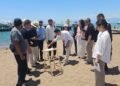
The Kyrgyz delegation on the beach in Antalya during the Blue Flag briefing. Photo: Blue Flag International